
In today’s fast-moving digital world, businesses are no longer limited to traditional marketing methods like newspapers, billboards, or TV ads. Everything is shifting online—and that’s where digital marketing comes in.
Whether you are a student, business owner, freelancer, or someone looking to build a career, understanding digital marketing is one of the most valuable skills you can learn today.
This guide will help you understand digital marketing from scratch, simply and practically—no complicated jargon, just real understanding.
What is digital marketing?
Digital marketing refers to all marketing efforts that use the internet or electronic devices to promote products, services, or brands.
In simple words:
Digital marketing = promoting anything online
This includes platforms like
- Social media (Facebook, Instagram, LinkedIn)
- Websites
- Mobile apps
Example:
When you search for something on Google and see ads—that’s digital marketing.
When you see Instagram ads—that’s also digital marketing.
Why is digital marketing important?
Digital marketing has become essential because people spend most of their time online. Let’s understand why it matters:
Key Benefits:
1. Cost-Effective
Compared to traditional marketing, digital marketing is much cheaper. Even with a small budget (₹500–₹1000), you can run ads.
2. Targeted Audience
You can target specific audiences based on:
- Age
- Location
- Interests
- Behavior
3. Measurable Results
You can track everything:
- Clicks
- Conversions
- Traffic
- Sales
4. Global Reach
Your business can reach people worldwide without opening physical stores.
5. High ROI (Return on Investment)
With a proper strategy, digital marketing gives better returns than traditional methods.
Types of Digital Marketing
Digital marketing is a broad field with multiple components. Let’s break them down:
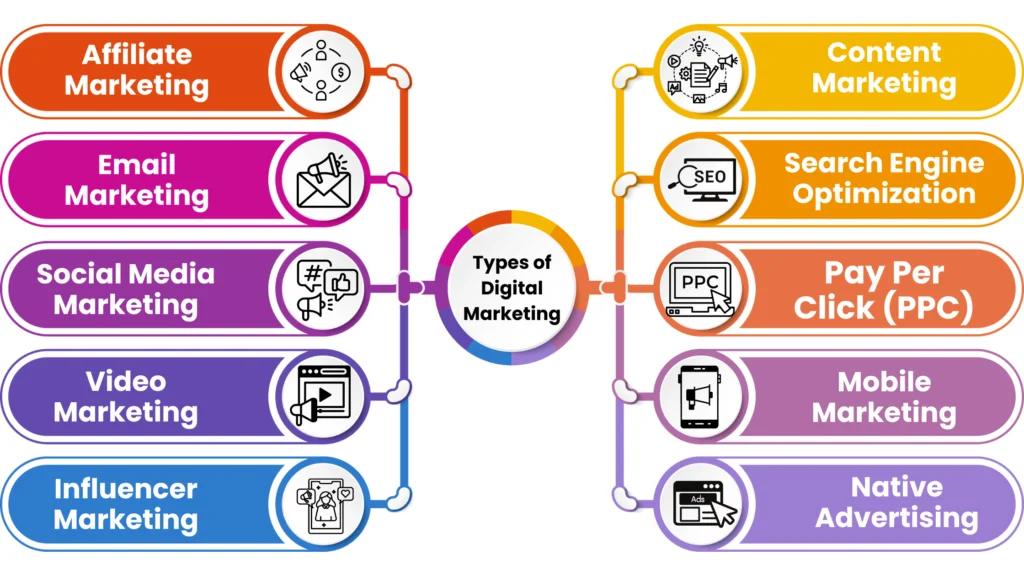
1. Search Engine Optimization (SEO)
SEO is the process of optimizing your website to rank higher on search engines like Google.
Example:
When you search “best digital marketing course,” the websites that appear on top are there because of SEO.
Types of SEO:
- On-Page SEO (content, keywords, titles)
- Off-Page SEO (backlinks)
- Technical SEO (site speed, mobile-friendly)
Benefits:
- Free traffic
- Long-term results
- Builds trust
2. Search Engine Marketing (SEM) / Google Ads
This is paid marketing where you run ads on search engines.
Example:
When you see “Sponsored” results on Google—that’s SEM.
Key Features:
- Instant results
- Pay-per-click (PPC)
- Highly targeted
3. Social Media Marketing (SMM)
This involves promoting your brand on social media platforms.
Popular platforms:
- Twitter (X)
What you can do:
- Post content
- Run ads
- Engage with the audience
Benefits:
- Brand awareness
- Customer engagement
- Traffic generation
4. Content Marketing
Content marketing is all about creating valuable content to attract and engage your audience.
Types of content:
- Blog posts
- Videos
- Infographics
- E-books
Example:
If you write helpful articles on your website, that’s content marketing.
5. Email Marketing
Email marketing is the process of sending emails to your audience to promote products or share information.
Types:
- Promotional emails
- Newsletters
- Welcome emails
Benefits:
- Direct communication
- High conversion rate
- Builds relationships
6. Affiliate Marketing
In affiliate marketing, you earn a commission by promoting someone else’s product.
Example:
You promote a product using a special link and earn money for every sale.
7. Influencer Marketing
Influencers promote products to their followers.
Example:
A YouTuber or Instagram influencer promoting a brand.
8. Mobile Marketing
This includes marketing through:
- SMS
- Apps
- Mobile ads
Since most users are on mobile, this is very powerful.
How does digital marketing work?
Digital marketing works through a simple process:
Step 1: Identify Your Audience
Understand:
- Who they are
- What they want
- Where they spend time online
Step 2: Choose the Right Platform
Not every platform is suitable for every business.
Example:
- B2B → LinkedIn
- Fashion → Instagram
Step 3: Create Content
Content is the heart of digital marketing.
Step 4: Promote
Use ads, SEO, and social media to promote your content.
Step 5: Analyze & Optimize
Track performance and improve continuously.
Key of Digital Marketing Tools
Here are some important tools every marketer should know:
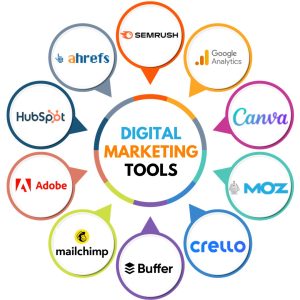
SEO Tools:
- Google Analytics
- Google Search Console
- Ahrefs
- SEMrush
Social Media Tools:
- Meta Business Suite
- Hootsuite
- Buffer
Email Tools:
- Mailchimp
- ConvertKit
Ads Tools:
- Google Ads
- Facebook Ads Manager
Skills are required for digital marketing.
To succeed in digital marketing, you need a mix of skills:
1. Basic Computer Knowledge
You should be comfortable using the internet and tools.
2. Content Writing
Good content attracts users.
3. SEO Knowledge
Understanding keywords and ranking factors.
4. Data Analysis
Reading reports and improving strategies.
5. Creativity
Creating engaging content and ads.
6. Communication Skills
For audience engagement and branding.
Digital Marketing Strategy for Beginners
Here’s a simple strategy you can follow:
Step 1: Set a Goal
Example:
- Increase website traffic
- Generate leads
- Boost sales
Step 2: Choose Platform
Focus on 1–2 platforms initially.
Step 3: Keyword Research
Find what people are searching for.
Step 4: Create Valuable Content
Solve user problems.
Step 5: Use SEO + Social Media
Promote your content.
Step 6: Run Ads (Optional)
Start with a small budget.
Step 7: Track Results
Use analytics tools.
Common mistakes beginners make
Avoid these mistakes:
1. Not Understanding the Audience
Always know who you are targeting.
2. Ignoring SEO
Without SEO, your content won’t rank.
3. Posting Without Strategy
Random posting doesn’t work.
4. Expecting Quick Results
Digital marketing takes time.
5. Not Tracking Performance
Data is everything.
Career Opportunities in the Digital Marketing Field.
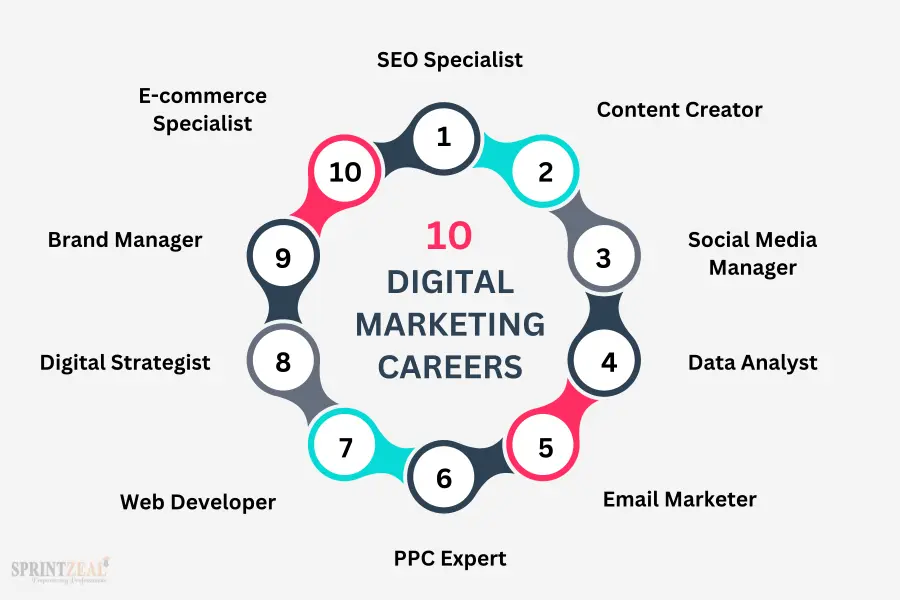
Digital marketing is one of the fastest-growing career fields.
Popular Job Roles:
- SEO Specialist
- Social Media Manager
- PPC Expert
- Content Writer
- Digital Marketing Manager
Salary (India Approx.):
| Experience Level | Salary (Approx) |
|---|---|
| Fresher | ₹15,000 – ₹25,000/month |
| 1–3 Years | ₹30,000 – ₹60,000/month |
| 5+ Years | ₹80,000+ /month |
- Fresher: ₹15,000 – ₹30,000/month
- Experienced: ₹50,000 – ₹150,000+/month
Skills required for Digital Marketing
To succeed, you need:
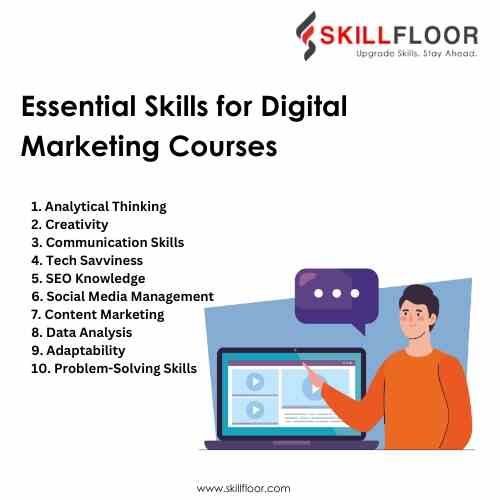
- Communication skills
- Creativity
- Analytical thinking
- Basic technical knowledge
- SEO & social media understanding
Common Mistakes to Avoid
❌ Not understanding the audience
❌ Ignoring SEO
❌ Posting without a strategy
❌ Not tracking performance
❌ Focusing only on selling
How to start Digital Marketing as a beginner?
If you’re starting, follow this:
Step 1: Learn Basics
Start with free resources (YouTube, blogs).
Step 2: Practice
Create:
- Blog
- Instagram page
- YouTube channel
Step 3: Take a Course
Enroll in a digital marketing course for structured learning.
Step 4: Work on Projects
Do internships or freelance work.
Step 5: Build Portfolio
Show your work to clients or employers.
Digital Marketing vs Traditional Marketing
| Feature | Digital Marketing | Traditional Marketing |
|---|---|---|
| Cost | Low | High |
| Reach | Global | Local |
| Targeting | Advanced | Limited |
| Results | Measurable | Hard to measure |
| Speed | Fast | Slow |
Future of Digital Marketing
Digital marketing. The future of digital marketing is bright. With increasing internet usage, businesses will invest more in online marketing. With technologies such as AI, automation, and data analytics, we will ensure our marketing strategy is smarter and more efficient.
Latest Trends in Digital Marketing?
To stay ahead, you must follow trends:
🔥 1. AI in Marketing
AI tools help automate tasks and improve targeting.
🔥 2. Voice Search
People use voice assistants more than typing.
🔥 3. Video Content
Short videos (Reels, Shorts) dominate.
🔥 4. Personalization
Customized content performs better.
🔥 5. Influencer Growth
Micro-influencers are becoming powerful.
How to Start Digital Marketing as a Beginner?
If you’re starting, follow this:
Step 1: Learn Basics
Start with free resources (YouTube, blogs).
Step 2: Practice
Create:
- Blog
- Instagram page
- YouTube channel
Step 3: Take a Course
Enroll in a digital marketing course for structured learning.
Step 4: Work on Projects
Do internships or freelance work.
Step 5: Build Portfolio
Show your work to clients or employers.
Conclusion
Digital marketing is one of the most powerful and in-demand skills in today’s world. Whether you want to grow a business, build a personal brand, or start a career, digital marketing opens endless opportunities.
The best part?
You don’t need a big investment—just the right knowledge, consistency, and practice.
Start small, learn continuously, and stay up to date on trends. With time and effort, you can become an expert in digital marketing and achieve great success.