In today’s digital world, people see advertisements almost everywhere. Whether they are using social media, browsing websites, or using mobile apps, they come across many ads every day. Because of this, it has become harder for businesses to grab people’s attention with traditional advertising alone. Today, customers want helpful information before they decide to buy a product or service.
This is where content marketing plays an important role.
Content marketing is more than just writing blog posts or sharing updates on social media. It is a marketing strategy that focuses on creating useful, interesting, and relevant content that helps people solve their problems or answer their questions. Instead of trying to sell something immediately, businesses first provide value to their audience. This helps build trust, creates a strong brand image, and develops long-term relationships with customers.
Whether you own a small business, a startup, an e-commerce store, or a personal brand, content marketing can help you attract more visitors to your website, generate quality leads, improve your SEO, and grow your audience over time.
What is Content Marketing?

Content marketing is a marketing approach focused on creating and distributing valuable content to attract and retain a target audience.
The main goal is not immediate sales. The goal is to educate, inform, entertain, or solve problems for users. Once trust is built, customers naturally become interested in your products or services.
Examples include:
- Blog posts
- Videos
- Social media content
- Infographics
- Email newsletters
- Podcasts
- Case studies
- E-books
- Webinars
Think about this: instead of saying “Buy our product”, content marketing says, “Here’s something useful that can help you.”
That difference changes everything.
[Image Suggestion: Content marketing ecosystem infographic]
Why Content Marketing Matters Today
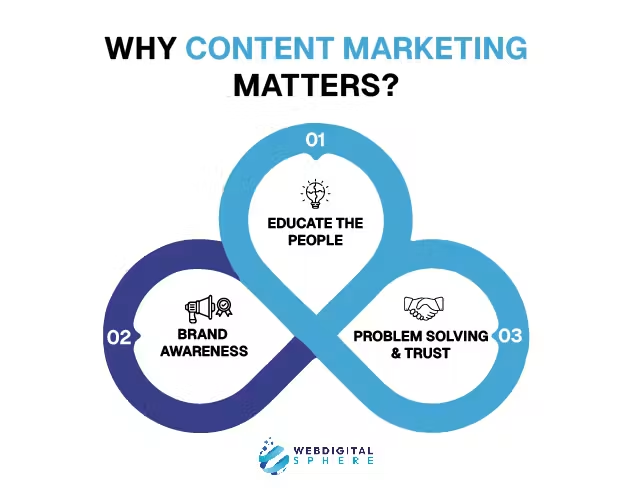
Consumer behaviour has changed significantly.
People research products before buying. They compare brands, read reviews, watch videos, and search Google for answers.
If your business creates useful content, customers discover your brand during this research process.
Some major benefits include:
1. Builds Brand Awareness
Consistent content helps people recognise your business.
2. Improves Search Engine Rankings
Quality content helps websites rank higher on search engines.
3. Generates Leads
Helpful content attracts potential customers.
4. Creates Authority
Sharing expertise positions your business as a trusted source.
5. Increases Customer Loyalty
People return to brands that provide value.
Types of Content Marketing
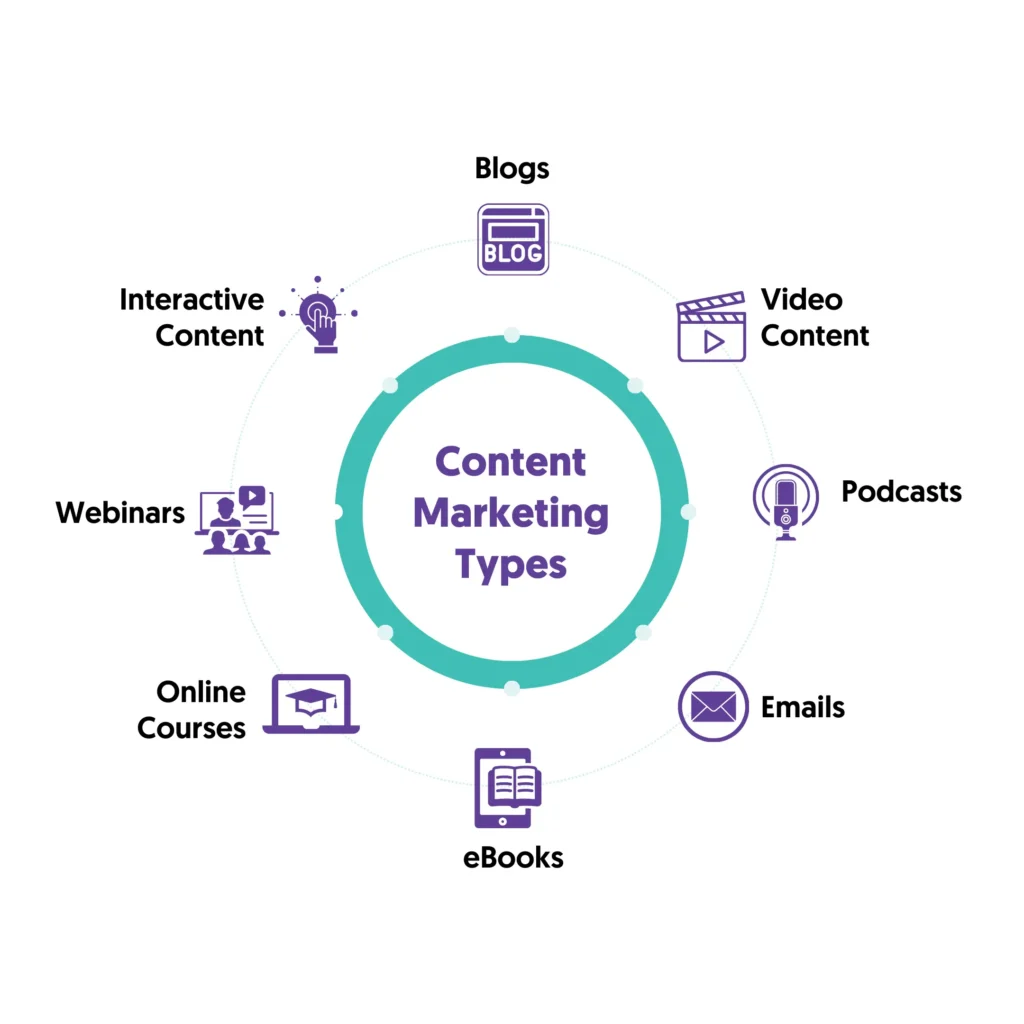
Content marketing is broader than many people realise.
Blog Content
Blogs remain one of the strongest tools for organic traffic.
Examples:
- Beginner guides
- How-to articles
- Industry updates
- Product comparisons
- Educational content
Blogs help improve SEO while answering user questions.
Video Content
Video marketing continues growing rapidly.
Popular video content includes:
- Tutorials
- Product demos
- Behind-the-scenes videos
- Reels
- Explainer videos
People often prefer watching rather than reading.
[Image Suggestion: Video creator recording content]
Social Media Content
Platforms like Instagram, Facebook, LinkedIn, and X allow businesses to engage with audiences directly.
Examples:
- Carousels
- Short videos
- Tips
- Polls
- Stories
- Educational posts
Email Marketing Content
Email remains one of the highest ROI marketing channels.
Businesses use emails to:
- Share updates
- Promote content
- Nurture leads
- Offer personalized recommendations
Infographics
Visual content helps explain complex ideas quickly.
People often share infographics because they are easy to consume.
Podcasts
Audio content gives audiences another way to consume information.
Many professionals listen while commuting or working.
The Content Marketing Funnel
Content supports every stage of the customer journey.
Awareness Stage
People realise they have a problem.
Content examples:
- Blog posts
- Educational videos
- Social media tips
Consideration Stage
Users evaluate possible solutions.
Content examples:
- Case studies
- Comparison articles
- Webinars
Decision Stage
Customers prepare to purchase.
Content examples:
- Testimonials
- Product demonstrations
- Reviews
[Image Suggestion: Marketing funnel illustration]
How to Create a Content Marketing Strategy
Without a strategy, content becomes random.
A structured approach improves results.
Step 1: Define Goals
Ask:
What do you want?
Examples:
- Increase traffic
- Generate leads
- Grow followers
- Increase sales
- Build authority
Clear goals create direction.
Step 2: Understand Your Audience
Audience research is critical.
Identify:
- Age
- Interests
- Problems
- Online behavior
- Search intent
The better you understand users, the better your content becomes.
Step 3: Keyword Research
Search engine optimisation and content work together.
Use keyword tools to discover:
- Search volume
- Competition
- User intent
Examples:
- Content marketing strategy
- SEO content tips
- Digital marketing guide
Step 4: Build a Content Calendar
Planning prevents inconsistency.
Your calendar may include:
- Topic
- Format
- Publishing date
- Platform
- Keywords
Consistency matters more than publishing volume.
Step 5: Create High-Quality Content
Focus on:
- Originality
- Readability
- Value
- Accuracy
- User experience
Avoid creating content just for search engines.
Write for humans first.
Content Marketing and SEO
SEO and content marketing are connected.
Search engines reward content that helps users.
SEO practices include:
- Keyword optimization
- Meta descriptions
- Internal linking
- Heading structure
- Image optimization
- Mobile responsiveness
Good content plus SEO creates long-term growth.
Common Content Marketing Mistakes
Many businesses create content but fail to achieve results.
Common mistakes include:
Ignoring Audience Needs
Talking only about products can reduce engagement.
Inconsistent Publishing
Posting once a month and disappearing hurts momentum.
Focusing Only on Sales
Provide value before promotion.
Weak Headlines
Titles determine whether users click.
No Content Promotion
Publishing alone is not enough.
Distribute content effectively.
Content Promotion Strategies
Creating content is only half the process.
Promote through:
- Social media
- Email campaigns
- Communities
- Influencer collaborations
- Paid advertising
- SEO
Promotion increases visibility.
[Image Suggestion: Social media sharing illustration]
Metrics to Measure Content Success
Track performance using:
- Website traffic
- Bounce rate
- Engagement
- Social shares
- Leads generated
- Keyword rankings
- Conversion rates
Analytics helps identify what works.
Future of Content Marketing

Content marketing continues evolving.
Trends include:
- AI-assisted content
- Personalized experiences
- Interactive content
- Voice search optimization
- Short-form videos
- Community-driven content
Businesses that adapt early often gain an advantage.
Conclusion
Content marketing is more than a trend. It is a long-term strategy focused on helping people first and selling second.
When businesses consistently create valuable content, they build trust, attract audiences, improve search rankings, and create stronger customer relationships.
Success does not happen overnight. Content marketing requires patience, creativity, and consistency.
Start small. Understand your audience. Publish useful content regularly.
Over time, your content can become one of your most valuable business assets.
The brands that educate and help people today are often the brands people remember tomorrow.
FAQ
1. What is content marketing?
Content marketing is a strategic marketing approach focused on creating and distributing valuable, relevant, and consistent content to attract, engage, and retain a target audience.
2. Why is content marketing important for businesses?
Content marketing helps businesses build brand awareness, establish authority, generate leads, improve SEO, and nurture customer relationships over time.
3. What are the main goals of content marketing?
The primary goals include:
- Increasing website traffic
- Building brand trust
- Generating leads
- Improving customer engagement
- Boosting conversions
- Enhancing customer retention
4. What types of content are used in content marketing?
Common content formats include:
- Blog posts
- Articles
- Videos
- Infographics
- E-books
- Podcasts
- Case studies
- Webinars
- Social media posts
- Email newsletters
5. How does content marketing help with SEO?
Content marketing improves SEO by targeting relevant keywords, earning backlinks, increasing dwell time, and providing valuable information that search engines can rank.
6. What is a content marketing strategy?
A content marketing strategy is a structured plan that outlines content goals, target audience, content formats, distribution channels, and performance metrics.
7. How do I identify my target audience?
You can identify your audience by analyzing demographics, interests, pain points, online behavior, and customer feedback to create detailed buyer personas.
8. What is a buyer persona?
A buyer persona is a semi-fictional representation of your ideal customer based on research, data, and customer insights.
9. How often should businesses publish content?
Consistency is more important than frequency. Many businesses publish content weekly, bi-weekly, or monthly based on available resources and goals.
10. What makes content valuable?
Valuable content is:
- Informative
- Relevant
- Accurate
- Engaging
- Actionable
- Focused on solving audience problems