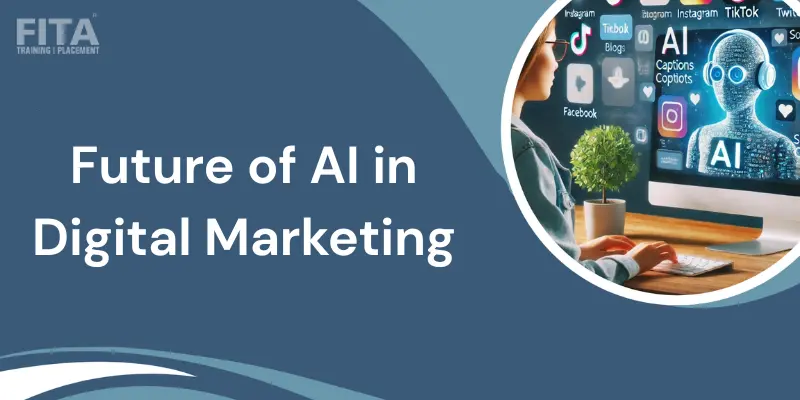
Artificial Intelligence (AI) is now an important part of digital marketing. It is no longer just a future technology. Today, businesses use AI to improve customer experience, create content, analyse data, and run better advertising campaigns.
In the last few years, AI has changed the way marketers plan, manage, and improve their marketing campaigns. Many tasks that once took hours to complete can now be done in just a few minutes with the help of AI tools. This saves time, improves efficiency, and helps businesses make better marketing decisions.
As AI technology continues to grow, it will play an even bigger role in digital marketing. Businesses that learn how to use AI effectively can reach the right audience, improve their marketing results, and stay ahead of their competitors.
In this guide, you will learn how AI is changing digital marketing, the latest trends to watch, and how businesses can use AI to grow and succeed.
What is AI in Digital Marketing?
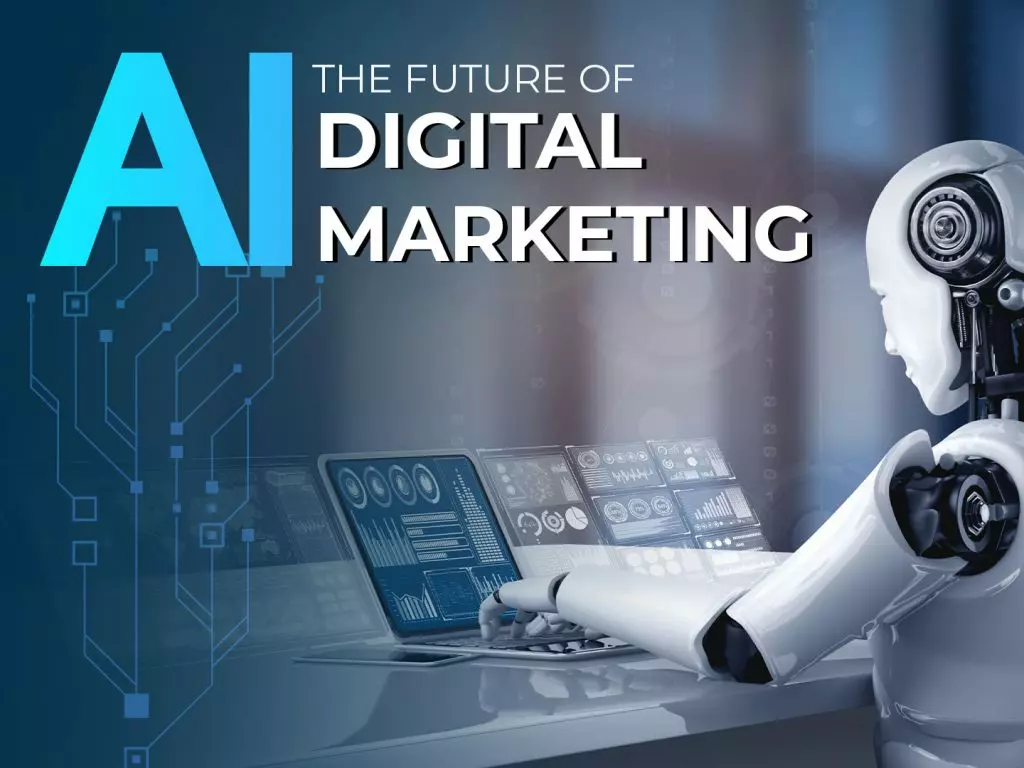
‘Artificial intelligence’ in digital marketing refers to the use of machine learning, natural language processing, predictive analytics, and automation technologies to improve marketing performance.
AI helps marketers:
- Analyze large volumes of data
- Understand customer behavior
- Personalize user experiences
- Automate repetitive tasks
- Optimize advertising campaigns
- Improve customer engagement
Instead of relying solely on human intuition, marketers can make smarter decisions using data-driven insights generated by AI systems.
Why AI is Becoming Essential for Marketers
Modern consumers expect highly personalised experiences. They want brands to understand their needs, preferences, and behaviours.
However, managing thousands—or even millions—of customer interactions manually is nearly impossible.
AI solves this challenge by helping businesses:
- Process customer data in real time
- Predict future behaviors
- Deliver personalized recommendations
- Improve customer service
- Increase conversion rates
- Reduce operational costs
Companies that embrace AI early often gain a significant advantage over competitors who rely on traditional marketing methods.
The Evolution of AI in Marketing
A decade ago, marketing automation mainly involved scheduled emails and basic audience segmentation.
Today, AI can:
- Write content
- Generate images and videos
- Predict purchasing behavior
- Optimize ad bidding
- Analyze sentiment
- Conduct customer conversations
As AI capabilities continue to improve, marketing is becoming more intelligent, efficient, and customer-focused.
Future Trend #1: Hyper-Personalization at Scale
Personalisation has become one of the most important aspects of successful marketing.
Traditional personalisation might include using a customer’s first name in an email. AI takes personalisation to an entirely new level.
How AI Enables Hyper-Personalization
AI can analyse:
- Browsing history
- Purchase behavior
- Demographics
- Social interactions
- Search intent
- Device usage
Based on this data, AI can create highly personalised experiences for every user.
Examples
- Personalized product recommendations
- Dynamic website content
- Customized email campaigns
- Personalized advertisements
- Tailored offers and discounts
In the future, customers will expect every interaction to feel uniquely designed for them.
Future Trend #2: AI-Powered Content Creation
Content remains the foundation of digital marketing.
AI tools are increasingly helping marketers create the following:
- Blog posts
- Social media captions
- Product descriptions
- Video scripts
- Email campaigns
- Ad copy
Benefits of AI Content Creation
- Faster production
- Lower content costs
- Improved consistency
- Enhanced creativity
- Better scalability
However, human creativity and strategic thinking will still be necessary to ensure authenticity and emotional connection.
The future belongs to marketers who combine AI efficiency with human storytelling.
Future Trend #3: Predictive Analytics
One of AI’s most powerful capabilities is predicting future outcomes based on historical data.
Predictive analytics helps businesses answer questions such as the following:
- Which customers are likely to purchase?
- Which leads are most valuable?
- What products will trend next month?
- Which campaigns will perform best?
Benefits
- Better decision-making
- Reduced marketing waste
- Higher conversion rates
- Improved customer retention
Rather than reacting to customer behaviour, marketers will proactively anticipate customer needs.
Future Trend #4: AI-Powered Search Optimization
Search engines are becoming smarter.
AI-driven algorithms now focus more on:
- User intent
- Context
- Content quality
- Experience signals
Future SEO strategies will require marketers to create content that genuinely solves user problems rather than simply targeting keywords.
AI and SEO
AI tools help marketers:
- Conduct keyword research
- Analyze competitors
- Identify content gaps
- Optimize content structure
- Improve technical SEO
As search engines continue to evolve, AI-assisted SEO will become a necessity rather than an option.
Future Trend #5: Voice Search Optimization
Voice assistants such as Siri, Alexa, and Google Assistant have changed how people search online.
Instead of typing:
“Best digital marketing course”
Users may ask:
“What is the best digital marketing course for beginners near me?”
Future Impact
Voice searches tend to be:
- Longer
- More conversational
- Question-based
Marketers will need to optimise content for natural language queries and conversational search patterns.
Future Trend #6: AI Chatbots and Virtual Assistants
Customer support is undergoing a major transformation.
AI chatbots can now:
- Answer questions instantly
- Recommend products
- Resolve common issues
- Collect leads
- Schedule appointments
Benefits
- 24/7 customer service
- Faster response times
- Lower support costs
- Improved customer satisfaction
Future AI assistants will become increasingly human-like, providing seamless customer interactions.
Future Trend #7: Programmatic Advertising
Programmatic advertising uses AI to automate ad buying and placement.
Instead of manually selecting audiences, AI can:
- Identify target customers
- Determine bidding strategies
- Optimize ad placement
- Improve campaign performance
Why It Matters
Programmatic advertising delivers:
- Better targeting
- Higher ROI
- Lower advertising costs
- Faster optimization
As AI becomes more advanced, advertising campaigns will become increasingly autonomous.
Future Trend #8: Visual Search Technology
Visual search allows users to search using images instead of text.
For example:
- Uploading a picture of a shoe to find similar products
- Taking a photo of furniture for recommendations
Marketing Opportunities
Businesses can:
- Optimize product images
- Improve e-commerce experiences
- Increase product discovery
Visual search is expected to become a major driver of online shopping in the coming years.
Future Trend #9: AI-Driven Customer Journey Mapping
Understanding the customer journey is critical for successful marketing.
AI helps businesses identify:
- Customer touchpoints
- Purchase triggers
- Drop-off points
- Conversion barriers
Benefits
- Better user experiences
- Higher conversions
- Improved customer satisfaction
Future marketing strategies will rely heavily on AI-generated journey insights.
Future Trend #10: Sentiment Analysis
Understanding how customers feel about a brand is becoming increasingly important.
AI-powered sentiment analysis examines:
- Reviews
- Social media posts
- Customer feedback
- Online conversations
It can determine whether sentiment is:
- Positive
- Neutral
- Negative
This helps businesses make data-driven decisions and respond quickly to customer concerns.
Future Trend #11: AI Video Marketing
Video content continues to dominate digital marketing.
AI tools are making video production easier by helping marketers:
- Generate scripts
- Create animations
- Produce voiceovers
- Edit videos automatically
- Generate subtitles
Future Outlook
AI-generated videos will become more sophisticated, reducing production costs while increasing content output.
Future Trend #12: Conversational Marketing
Consumers increasingly prefer real-time conversations with brands.
AI-powered conversational marketing includes:
- Chatbots
- Live messaging
- Virtual assistants
- Interactive customer support
These tools help create immediate engagement and improve customer relationships.
Future Trend #13: AI-Powered Email Marketing
Email marketing remains one of the highest ROI channels.
AI enhances email marketing by:
- Personalizing subject lines
- Optimizing send times
- Segmenting audiences
- Predicting engagement
- Automating workflows
Future email campaigns will become highly individualised and data-driven.
Future Trend #14: Automated Marketing Workflows
AI can automate repetitive marketing activities such as:
- Lead nurturing
- Customer segmentation
- Campaign reporting
- Social media scheduling
- Follow-up communications
Automation allows marketers to focus more on strategy and creativity.
Ethical Challenges of AI in Marketing
While AI offers tremendous opportunities, it also raises important ethical concerns.
Key Challenges
Data Privacy
Businesses must protect customer data and comply with privacy regulations.
Transparency
Customers should understand when they are interacting with AI systems.
Bias in Algorithms
AI systems can unintentionally reflect biases present in training data.
Over-Automation
Excessive automation can make brand interactions feel impersonal.
Successful marketers will balance automation with authentic human engagement.
Skills Marketers Need in the AI Era
As AI becomes more integrated into marketing, professionals should develop new skills.
Essential Skills
- Data analysis
- Prompt engineering
- AI tool management
- Content strategy
- Marketing automation
- Customer experience optimization
- SEO and analytics
- Critical thinking
The most valuable marketers will be those who can effectively collaborate with AI technologies.
How Businesses Can Prepare for the Future
To remain competitive, businesses should:
Invest in AI tools.
Adopt solutions for:
- Content creation
- Analytics
- Customer service
- Advertising automation
Build Strong Data Foundations
High-quality data improves AI performance.
Focus on Customer Experience
Use AI to enhance—not replace—human relationships.
Train Marketing Teams
Provide ongoing education on emerging AI technologies.
Experiment Continuously
Test new AI applications and measure results regularly.
The Future of AI in Digital Marketing
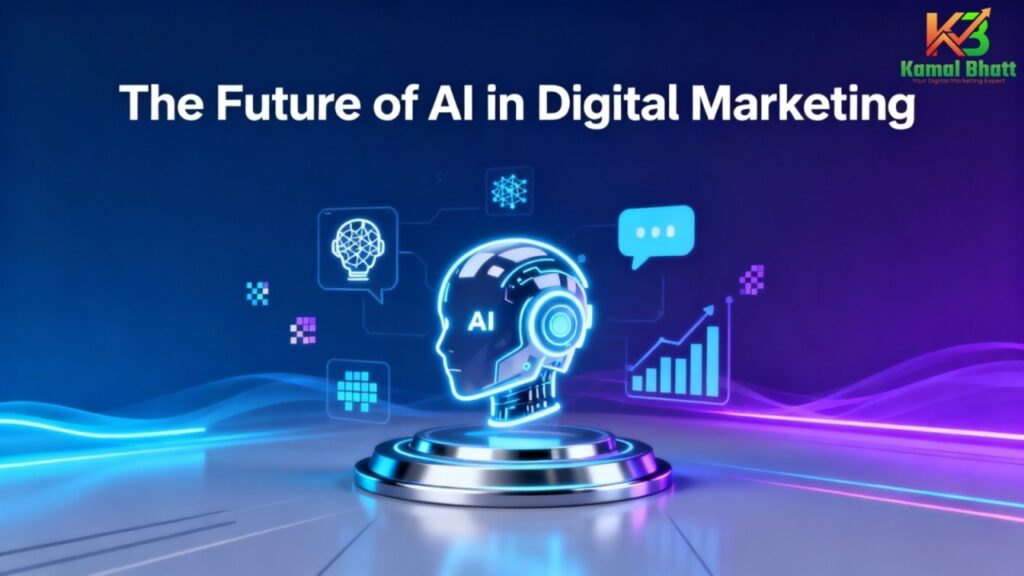
The future of digital marketing will be increasingly intelligent, personalised, and automated.
AI will continue to:
- Improve customer experiences
- Increase marketing efficiency
- Enhance campaign performance
- Generate deeper insights
- Drive business growth
Rather than replacing marketers, AI will empower them to work smarter and achieve better results.
Organisations that embrace AI today will be better positioned to lead tomorrow’s digital marketplace.
Conclusion
Artificial intelligence is fundamentally changing the digital marketing landscape. From hyper-personalisation and predictive analytics to automated content creation and intelligent advertising, AI is reshaping how businesses engage with customers.
As technology evolves, marketers must adapt by learning new skills, embracing data-driven strategies, and leveraging AI responsibly. The future belongs to businesses that combine the power of artificial intelligence with human creativity, empathy, and strategic thinking.
AI is not just the future of digital marketing—it is the present, and its influence will continue to grow in the years ahead.
FAQ
1. What is AI in digital marketing?
‘Artificial Intelligence’ (AI) in digital marketing refers to the use of machine learning, automation, data analytics, and predictive technologies to improve marketing strategies, customer experiences, and campaign performance.
2. Why is AI becoming important in digital marketing?
AI helps marketers analyse large amounts of data, automate repetitive tasks, personalise customer experiences, and make smarter, data-driven decisions faster than ever before.
3. How does AI improve customer personalisation?
AI analyses customer behaviour, preferences, browsing history, and purchase patterns to deliver personalised content, product recommendations, emails, and advertisements.
4. What are the main applications of AI in digital marketing?
Common applications include:
- Content creation
- Chatbots and virtual assistants
- Predictive analytics
- Marketing automation
- Email marketing
- SEO optimization
- Social media management
- Ad targeting and optimization
5. Can AI create marketing content?
Yes. AI can generate blog posts, social media captions, email copy, product descriptions, ad creatives, and other marketing content while helping marketers save time and increase productivity.
6. How does AI impact SEO?
AI helps with keyword research, search intent analysis, content optimisation, competitor analysis, technical SEO audits, and performance monitoring.
7. What is predictive analytics in AI marketing?
Predictive analytics uses historical data and machine learning algorithms to forecast future customer behaviour, purchasing trends, and campaign outcomes.
8. How do AI chatbots help businesses?
AI chatbots provide instant customer support, answer common questions, generate leads, guide users through the buying process, and improve customer satisfaction.
9. What is AI-powered marketing automation?
AI-powered marketing automation automates tasks such as email campaigns, lead nurturing, customer segmentation, social media scheduling, and campaign optimisation.
10. How does AI improve email marketing?
AI can:
- Personalize subject lines
- Optimize send times
- Segment audiences
- Recommend content
- Predict customer engagement
- Improve conversion rates