
In today’s digital world, businesses are no longer relying only on traditional advertising methods like TV, radio, or print media. Instead, they are focusing on something more powerful, long-term, and cost-effective—inbound marketing.
If you’ve ever read a blog, watched a YouTube tutorial, or followed a brand on social media, you’ve already experienced content inbound marketing in action.
But what exactly is content strategy? And how can beginners use it to grow their business?
In this complete guide, you’ll learn everything from basics to advanced strategies in a simple, human-friendly way.
What is Content Marketing?
Content marketing is a strategic approach focused on creating and sharing valuable, relevant, and consistent content to attract and engage a target audience.
Instead of directly selling your product, you provide useful information that solves problems. Over time, this builds trust — and trust leads to sales.
Simple Example:
- A fitness brand sharing workout tips on Instagram
- A digital marketing agency writing SEO blogs
- A skincare brand posting skincare routines on YouTube
👉 These are all examples of content authority marketing.
Why Content Marketing is Important
Content advertising is not just a trend—it’s a necessity in 2026 and beyond.
1. Builds Trust and Authority
When you consistently provide valuable content, people start seeing you as an expert in your field.
2. Improves SEO Ranking
Search engines like Google love fresh and relevant content. Blogs, articles, and guides help your website rank higher.
3. Generates our leads
Good content attracts the right audience who are more likely to convert into customers.
4. Cost-Effective Marketing
Compared to paid ads, content promotion gives long-term results without continuous spending.
5. Support for Social Media Growth
Content gives you something valuable to post and share regularly.
Types of Content Marketing
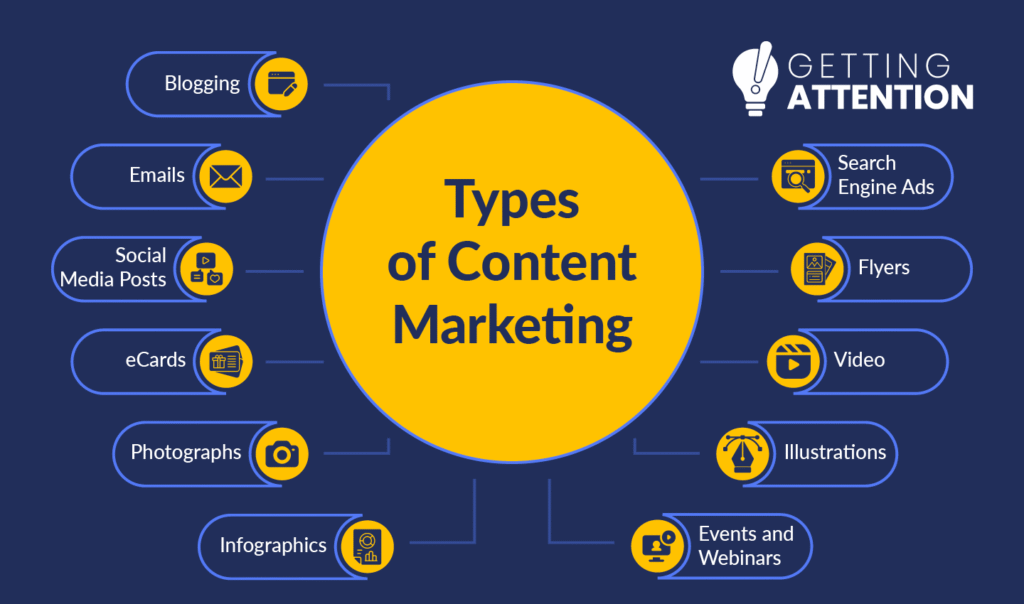
Content strategy is not limited to blogs. There are multiple formats you can use:
1. Blog Posts
Blogs are the backbone of content-based marketing. They help improve SEO and provide in-depth information.
2. Social Media Content
Platforms like Instagram, Facebook, and LinkedIn are great for engaging with your audience.
3. Video Content
Videos are highly engaging and have a higher reach compared to text.
4. Infographics
Visual content that simply explains complex information.
5. Email Newsletters
Helps in nurturing leads and maintaining relationships with customers.
6. E-books & Guides
Detailed content pieces that provide high value and can generate leads.
How Inbound Marketing Works
Content promotion follows a simple process:
- Attract—Create content that grabs attention
- Engage – Provide valuable and useful information
- Convert – Turn visitors into leads or customers
- Retain – Keep your audience engaged for long-term loyalty
Step-by-Step Content-Based Marketing Strategy
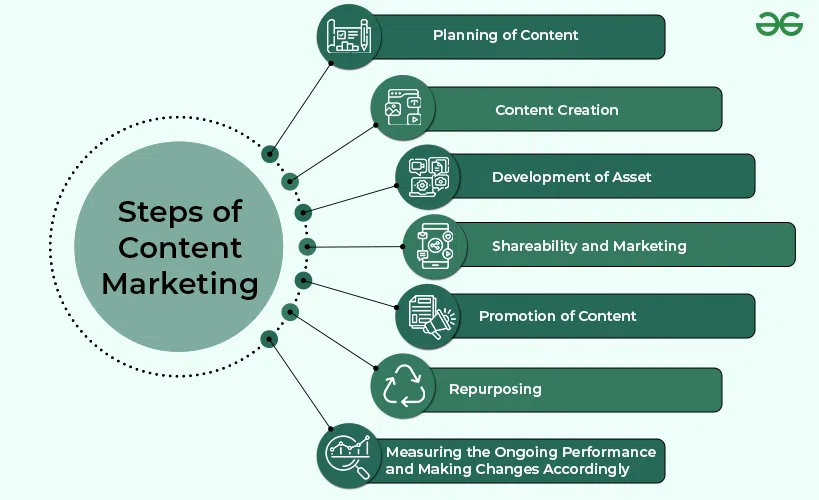
Let’s break it down into simple steps for beginners:
Step 1: Define Your Goal
Before creating content, ask yourself:
- Do you want traffic?
- Leads?
- Sales?
- Brand awareness?
Your goal will decide your strategy.
Step 2: Understand Your Audience
Know who you are targeting:
- Age group
- Interests
- Problems
- Online behavior
👉 The better you understand your audience, the better your content will perform.
Step 3: Keyword Research
Keyword research helps you find what people are searching for on Google.
Use tools like:
- Google Keyword Planner
- Ubersuggest
- Ahrefs
Example keywords:
- Media marketing for
- Content-led growth marketing strategy
- How to do content advertising
Step 4: Create High-Quality Content
Focus on:
- Solving problems
- Giving value
- Writing in simple language
- Using proper headings
👉 Remember: “Content is king, but value is queen.”
Step 5: Optimize for SEO
Use basic SEO techniques:
- Add keywords naturally
- Use headings (H1, H2, H3)
- Write meta title & description
- Use internal linking
- Optimize images
Step 6: Promote Your Content
Creating content is not enough — promotion is key.
Share your content on:
- Social media
- WhatsApp groups
- Email newsletters
- Online communities
Step 7: Analyze your performance
Track your results using tools like:
- Google Analytics
- Google Search Console
Check:
- Traffic
- Bounce rate
- Conversions
Best Content-Led Growth Tips for Beginners
✔ Be Consistent
Post regularly to build audience trust.
✔ Focus on your Quality, Not Quantity
One valuable post is better than 10 useless ones.
✔ Use storytelling for education marketing.
People connect with stories more than plain information.
✔ Add Call-to-Action (CTA)
Guide your audience on what to do next (subscribe, buy, contact).
✔ Repurpose your Content
Turn one blog into multiple posts, videos, or reels.
Common Mistakes to Avoid
Many beginners make these mistakes:
❌ Posting without a strategy
❌ Ignoring SEO
❌ Writing only promotional content
❌ Not understanding the audience
❌ Giving up too early
👉 Content marketing takes time, but results are long-lasting.
Digital Content Marketing Tools
Here are some useful tools:
Writing & SEO Tools:
- Grammarly
- Surfer SEO
- Yoast SEO
Design Tools:
- Canva
- Adobe Express
Analytics: The Tools
- Google Analytics
- SEMrush
Real-Life Example for Content Marketing
Let’s understand with a simple example:
A small bakery starts a blog:
- “How to bake a perfect chocolate cake.”
- “Top 5 cake decoration ideas”
People searching for these topics find the blog.
They trust the bakery’s expertise.
Eventually, they ordered cakes.
👉 This is how digital content-based marketing turns readers into customers.
Future of Content-Driven Marketing

Content-based marketing is evolving rapidly:
- AI-generated content is increasing
- Video content is dominating
- Voice search is growing
- Personalized content is trending
👉 Businesses that adapt will grow faster.
Conclusion
Content promotion is one of the most powerful ways to grow your business online. It helps to build trust, improve SEO, generate leads, and create a door for long-term success.
For beginners, the key is to start simple:
- Understand your audience
- Create valuable content
- Stay consistent
- Keep learning and improving
Remember, content promotion is not about selling — it’s about helping.
And when you help people, success opens doors that automatically follow.